Agreement on Temporary Labour Activity enabling citizens of both India and Russia to work temporarily in each other’s territory.
Agreement on Cooperation to Combat Irregular Migration between the two countries.
2. Health & Food Safety
Agreement on cooperation in healthcare, medical education, and science between India’s MoHFW and Russia’s Health Ministry.
Agreement between FSSAI (India) and Russia’s consumer protection agency on food safety cooperation.
3. Maritime Cooperation & Polar Waters
MoU on training specialists for ships operating in polar waters between India’s ports ministry and Russia’s transport ministry.
MoU between India’s Ministry of Ports, Shipping & Waterways and the Maritime Board of Russia for broader maritime cooperation.
4. Fertilizers
MoU involving JSC UralChem (Russia) and Indian fertilizer companies (RCF, NFL, IPL) for cooperation in fertilizer supply and production.
5. Customs & Commerce
Protocol between India’s CBIC and Russia’s Federal Customs Service for sharing pre-arrival information on goods and vehicles.
Bilateral agreement between India Post and Russian Post.
6. Academic Collaboration
MoU between Defence Institute of Advanced Technology (Pune) and National Tomsk State University for scientific and academic partnership.
Agreement between University of Mumbai, Lomonosov Moscow State University, and Russian Direct Investment Fund’s management company for collaborative programs.
7. Media Collaboration
Multiple MoUs between Prasar Bharati (India) and Russian media entities including:
Gazprom-Media Holding
National Media Group
BIG ASIA Media Group
TV-Novosti (with addendum)
TV BRICS
Focus on broadcasting cooperation and content exchange.
8. Announcements
Launch of the Programme for Development of Strategic Areas of India–Russia Economic Cooperation till 2030.
Russia decides to join the International Big Cat Alliance (IBCA).
Agreement for exhibition “India. Fabric of Time” between National Crafts Museum (New Delhi) and Tsaritsyno Museum (Moscow).
30-day e-Tourist Visa (gratis) for Russian nationals on reciprocal basis.
Group Tourist Visa (gratis) for Russian tourists.
Mission for Aatmanirbharta in Pulses
Launched October 2025
A centrally sponsored scheme aimed at achieving self-sufficiency in pulses over 2025-26 to 2030-31.
Total financial outlay: ₹11,440 crore for six years.
Objectives of the Mission
Boost domestic production of pulses, with special focus on Tur, Urad, and Masoor.
Promote climate-resilient pulse seed varieties for farmers.
Expand the area under pulses cultivation.
Support post-harvest storage and management technologies.
Encourage horizontal and vertical expansion of pulses into underutilized and competing crop areas.
Improve land productivity, promote sustainable crop rotations, and enhance soil health.
Procurement Support
Assured procurement of Tur, Urad, and Masoor for the next four years by:
NAFED
NCCF
Procurement conducted under the Price Support Scheme (PSS) of PM-AASHA.
Production Target
Target to reach 350 lakh tonnes of total pulses production by 2030-31 to ensure self-sufficiency.
Other Agriculture Extension Support
Sub-Mission on Agricultural Extension (SMAE)
Implemented by the Department of Agriculture & Farmers Welfare.
Aims to make the extension system farmer-driven.
Uses Agricultural Technology Management Agency (ATMA) at the district level for:
Technology dissemination,
Farmer training,
Operationalizing extension reforms.
Pro Tem Security Certification Extension
Issued by: National Centre for Communication Security (NCCS), under the Department of Telecommunications (DoT).
Purpose: Ensure business continuity for telecom/ICT OEMs while complying with mandatory security certification requirements.
Original validity: 6 months (introduced in October 2024 for IP Router and Wi-Fi CPE products).
New validity: Extended to 2 years, reducing frequency of renewals and easing pressure on industry.
Process:
OEMs submit declaration of conformance confirming compliance with most ITSAR (Indian Telecommunication Security Assurance Requirements) standards.
Equipment is tested at Telecom Security Testing Lab (TSTL).
OEMs provide an undertaking to address any deficiencies identified during testing within certificate validity.
Scope extension: Now includes 5G Core SMF, Optical Line Terminal (OLT), Optical Networking Terminal (ONT), and new product launches.
Impact: 102 Pro Tem certificates issued so far, facilitating uninterrupted business operations.
Additional DoT Initiatives for Ease of Doing Business
Security test evaluation fees: Reduced by up to 95% for telecom and ICT products.
Simplified compliance process: Applied to Highly Specialized Equipment (HSE) and End-of-Sale/End-of-Life telecom products.
Goal: Encourage domestic and international OEMs, reduce regulatory burden, and enable smoother market operations.
Regulatory Framework
Implemented under: ComSec scheme, covering security testing and certification of telecom equipment.
Mandatory requirement: All OEMs, importers, and dealers must ensure equipment undergoes security certification before sale, import, or use in India.
Governing frameworks:
Mandatory Testing and Certification of Telecom Equipment (MTCTE), first notified in September 2017.
Telecommunications (Framework to Notify Standards, Conformity Assessment, and Certification) Rules, 2025, which superseded MTCTE.
International Tracked Packet Service (ITPS)
Bilateral Agreement on ITPS
Parties involved: Department of Posts (India) and JSC Russia Post.
Purpose: Operationalise International Tracked Packet Service (ITPS) between India and Russia.
Significance: Strengthens cross-border postal cooperation and supports growing e-commerce trade.
Features of ITPS
Provides a cost-effective, trackable, and reliable logistics channel for low-value consignments.
Includes:
Electronic advance data transmission
End-to-end tracking
Delivery confirmation
Benefits: Enhanced transparency, security, and ease of customs clearance.
Economic and Trade Impact
Russia is a growing market for Indian products, including:
Health and wellness items
Apparel
Jewellery
Home décor
MSME-driven products
Preferential delivery rates by Russia Post allow India Post to offer competitive tariffs, improving price competitiveness and market access.
Support for Small Businesses
1,013 Dak Ghar Niryat Kendras (DNKs) set up across India in collaboration with CBIC to facilitate exports via postal channels.
Significant exports come from Tier-2 and Tier-3 cities, highlighting participation of MSMEs, artisans, start-ups, and rural entrepreneurs.
Expected Outcomes
Enables small businesses to sell products on Russian e-marketplaces with affordable logistics rates and reliable delivery timelines.
Promotes digital commerce, deepens bilateral trade, and strengthens postal and logistics collaboration between India and Russia.
Inno-Yoddha 2025
Event: Annual Idea & Innovation Competition and Seminar of the Indian Army.
Venue & Dignitary: Held at Manekshaw Centre, New Delhi; presided over by Lieutenant General Pushpendra Pal Singh, VCOAS.
Purpose: Flagship platform to identify, nurture, and scale in-house innovations addressing capability gaps in operations, logistics, and training.
Focus: Empowers soldiers to propose practical solutions based on field experience, technical skills, and ingenuity.
Operational Context
Innovations address challenges arising from:
Extreme weather and demanding terrain
Evolving adversarial threats
Complex operational environments
Emphasis on insight, adaptability, and creativity of personnel.
Achievements over Past 5 Years
117 ideas selected for development.
47 products successfully productised; 9 under prototype evaluation.
30 Intellectual Property Rights (IPRs) filed.
5 innovations transferred to industry for mass production, including:
Exploder (FC Tech)
Agniastra (Red Kite Digital Tech)
Vidyut Rakshak (IS Trading Co)
Baaz Attack Drone
Multi-purpose Octacopter
Inno-Yoddha 2025–26 Edition
Conducted between November–December 2025.
89 innovations submitted from various arms and services.
32 innovations selected for further development and felicitation.
Selected innovations will be:
Refined, upscaled, and prepared for field deployment
Filed for relevant IPRs
Potentially transferred to industry for mass production, supporting Atmanirbhar Bharat and indigenous defence manufacturing.
Significance & Leadership Insight
VCOAS interaction: Commended soldier-driven nature of innovations.
Innovations reflect field experience, technical proficiency, and problem-solving creativity.
Strategic impact: Strengthens Army’s modernisation, self-reliance, and technological empowerment.
Promotes a culture of innovation, turning operational challenges into opportunities.
Harimau Shakti 2025
Overview of Exercise
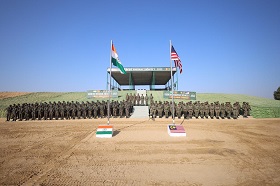
Name: Fifth edition of Joint Military Exercise – Harimau Shakti 2025
Dates: 05–18 December 2025
Venue: Mahajan Field Firing Range, Rajasthan
Participating Forces:
India: Troops mainly from the DOGRA Regiment
Malaysia: Troops from the 25th Battalion, Royal Malaysian Army
Source: PIB
Objectives
Rehearse Sub-Conventional Operations under Chapter VII of United Nations Mandate
Synergize joint responses during counter-terrorist operations
Enhance interoperability between Indian and Malaysian troops
Minimize risk to life and property during peacekeeping operations while upholding UN mandates
Scope & Activities
Tactical exercises:
Cordon, search, and destroy missions
Heliborne operations
Securing helipads
Casualty evacuation drills
Skill-building sessions:
Army Martial Arts Routine (AMAR)
Combat reflex shooting
Yoga
Exchange of best practices and joint drills to enhance mutual learning
Significance
Strengthens defence cooperation between India and Malaysia
Fosters strong bilateral relations
Promotes a culture of joint operational readiness and knowledge sharing in peacekeeping and counter-terrorism
Labour Mobility Agreements between India and Russia
Labour Mobility Agreements
India and Russia signed two key pacts:
Agreement on temporary labour activity enabling citizens to work in each other’s territory.
Agreement on cooperation to combat irregular migration.
These agreements aim to create a formal, regulated framework for employing Indian semi-skilled and skilled workers in Russia.
Intended to prevent exploitation, especially after cases of Indian nationals being fraudulently recruited to fight for the Russian armed forces in Ukraine.
Indian officials say mobility agreements will help track where global Indian job-seekers are going.
Foreign Secretary Vikram Misri confirmed the issue of Indians fighting for Russian forces was discussed during the summit.
Demand for Indian Workers
Russia is estimated to require around 500,000 semi-skilled workers.
India plans to leverage its “strength” in semi-skilled labour for overseas employment.
External Affairs Minister S. Jaishankar recently emphasized India’s push for formal mobility arrangements.
Media and Academic Cooperation
India and Russia also signed agreements to boost media and academic collaboration.
President Vladimir Putin attended the launch of the Indian edition of Russia Today (RT)—its second international edition after Arabic.
Tourism & Visa Announcements
PM Narendra Modi announced:
Gratis 30-day e-tourist visas for Russian nationals on a reciprocal basis.
Gratis group tourist visas for Russian citizens.
Measures aim to enhance people-to-people contact and strengthen bilateral ties.
Waqf Property Registration
Deadline for Waqf Property Registration
Minority Affairs Minister Kiren Rijiju stated that the deadline for registering Waqf properties on the UMEED portal will not be extended.
The final date for registration is 06/12/2025, marking the end of the six-month period mandated under the Waqf Amendment Act.
No Immediate Penal Action
Although the deadline cannot be extended, the Minister assured that no punitive action will be taken for the next three months.
This grace period is meant as a humanitarian measure for mutawallis (Waqf caretakers).
Individuals who attempted but could not complete registration may approach their State Waqf Tribunals for an extension.
Legal Constraints
Rijiju emphasized that:
The deadline is fixed by law (Waqf Amendment Act).
The Supreme Court has explicitly ordered that the six-month deadline cannot be extended by the government.
Only Waqf Tribunals have the authority to grant an extension of up to six more months.
Status of Registration
Over 1.5 lakh Waqf properties have been registered on the UMEED portal so far.
This accounts for less than 20% of the 8.72 lakh Waqf establishments across 30 States/UTs.
Waqf properties covered span over 38 lakh acres according to the WAMSI portal.
State-wise Progress
States such as Karnataka, Punjab, and Jammu & Kashmir have shown strong compliance.
Several other States are lagging behind in completing registrations.
NMDC and IIT Kanpur
Collaboration Between NMDC and IIT Kanpur
NMDC, India’s largest iron ore producer, signed a Memorandum of Understanding (MoU) with IIT Kanpur.
The MoU aims to strengthen industry-academia collaboration and promote adoption of digital technologies, including Artificial Intelligence (AI) and Machine Learning (ML).
The signing was done by Satyendra Rai (NMDC) and Prof. Ashoke De (IIT Kanpur), in the presence of Prof. Manindra Agrawal (Director, IIT Kanpur) and senior officials.
Key Areas of Collaboration
Cybersecurity: risk assessments, policy formulation, governance, and incident response.
AI and ML: integration into NMDC operations and advancement of digital technologies.
Capacity Building: knowledge sharing, training programs, and skill development.
Research and Innovation: joint research projects, pilot projects, and proof-of-concept development.
Objectives and Benefits
Strengthen digital defenses and operational intelligence of NMDC.
Create a secure, future-ready technological foundation.
Enhance NMDC’s commitment to becoming a digitally strong mining organization.
India’s Solar Momentum
Global Leadership and ISA
India is a founding member and host of the International Solar Alliance (ISA) headquarters in Gurugram.
In October 2025, India hosted the 8th ISA Assembly in New Delhi, bringing together ministers and delegates from over 125 member nations.
Focus areas: resilient solar value chains, inclusive access, and accelerated solar adoption.
Solar Capacity and Energy Mix
India’s solar capacity reached 129 GW as of October 2025.
Non-fossil electricity capacity exceeds 259 GW, contributing over 50% of the nation’s total installed power.
Solar energy has grown over 40-fold from 3 GW in 2014 to 129.92 GW in 2025, becoming the largest contributor to India’s renewable energy portfolio.
Panchamrit Framework (COP26, 2021)
500 GW Non-Fossil Installed Capacity by 2030 – Including solar, wind, hydro, biomass, nuclear.
50% of Electricity Capacity from Non-Fossil Sources by 2030 – Diversifying energy and reducing fossil fuel dependency.
Reduction of Projected Carbon Emissions by 1 Billion Tonnes by 2030.
Reduce Carbon Intensity of the Economy by 45% by 2030 (compared to 2005).
Net Zero Emissions by 2070 – Long-term sustainable development goal.
Global Renewable Energy Standing
India is 3rd in solar energy capacity globally.
India is 4th in wind energy and 4th in total installed renewable energy capacity.
Highlights India’s growing role in affordable, sustainable global energy markets.
Government Initiatives
Large-scale programmes accelerate renewable energy adoption, promote sustainable living, and strengthen clean technology ecosystems.
PM Surya Ghar Mission
Launched on 13 February 2024 with a ₹ 75,021 crore outlay.
Goal: Provide rooftop solar systems to 1 crore households, offering up to 300 units of free electricity per month.
As of December 2025:
23.9 lakh households have installed rooftop solar.
7 GW clean energy installed.
₹ 13,464.6 crore subsidy released.
The scheme is on track to achieve its target of 1 crore solar-powered homes.
Overall Significance
India’s rapid solar expansion contributes to low-carbon energy transition, energy security, and a sustainable electricity system.
Domestic deployment combined with global collaboration strengthens India’s position as a global clean energy leader.
Production-Linked Incentive (PLI) Scheme for Solar PV
Objective
Implemented by the Ministry of New and Renewable Energy (MNRE) under the National Programme on High-Efficiency Solar PV Modules.
Aim: Achieve GW-scale domestic manufacturing of high-efficiency solar PV modules.
Goal: Promote domestic production and reduce import dependence.
Financial Outlay and Structure
Total outlay: ₹24,000 crore.
Incentives are offered for five years post-commissioning, based on:
Actual sales
Efficiency performance
Selection of participants is done through a transparent process.
Implementation Tranches
Tranche I: ₹4,500 crore (approved April 2021)
Tranche II: ₹19,500 crore (approved September 2022)
Letters of Award issued: For setting up 48,337 MW of integrated and partially integrated manufacturing capacity.
Outcomes (as of June 2025)
Investment attracted: ₹48,120 crore
Employment generated: Around 38,500 jobs
PLI linked to local content: Encourages development of a robust solar PV ecosystem, adoption of advanced technology, and strengthening India’s energy self-reliance.