Conference to conclude with the Valedictory Address by Shri Om Birla.
Seven Years Of GeM’s Womaniya Initiative
Overview
The Government e-Marketplace (GeM) marked seven years of the Womaniya initiative, its flagship programme to enhance participation of women-led Micro and Small Enterprises (MSEs) in public procurement.
The commemorative event was held at Jeevan Bharti Building, New Delhi.
Scale and Impact
As of 14 January 2026:
Over 2 lakh women-led MSEs registered on the GeM portal.
Cumulative public procurement orders exceeded ₹80,000 crore.
Women-led enterprises account for 4.7% of GeM’s total order value.
This performance exceeds the mandated 3% procurement target for women-owned and women-led enterprises, reflecting effective policy implementation.
Genesis and Evolution of Womaniya
Launched on 14 January 2019.
Objective:
Address limited access of women entrepreneurs and Self-Help Groups (SHGs) to government markets.
Key features:
Direct, transparent and fully digital interface with government buyers.
Elimination of intermediaries.
Reduction of entry barriers in public procurement.
Evolution:
From an access-enabling platform to a national ecosystem of opportunity supporting scale, credibility and resilience of women-led enterprises.
Institutional and Multilateral Engagement
The event brought together:
Policymakers
Multilateral institutions
Ecosystem partners
Core emphasis:
Importance of institutional access, capability building, and sustained policy support.
Need for gender-responsive public procurement frameworks.
GeM Leadership Perspective
CEO, GeM, Shri Mihir Kumar highlighted:
Womaniya’s transformation into a structured and scalable ecosystem.
Role of policy-enabled digital procurement in promoting women entrepreneurship.
Key focus areas identified:
Price discovery and product comparison for government buyers.
Awareness among women entrepreneurs about:
Procurement trends
Government Financial Rules (GFR)
Importance of stakeholder convergence to strengthen the ecosystem.
Strategic Partnership: GeM–WCF MoU
A major milestone was the signing of an MoU between GeM and the Women’s Collective Forum (WCF).
Signatories:
Additional CEO, GeM – Shri Ajit B. Chavan
Chief Community Officer, WCF – Ms. Richa Sharma
Objectives of the partnership:
Build awareness of Business-to-Government (B2G) opportunities.
Support onboarding, documentation, compliance and product listing.
Enhance visibility and participation through:
Structured training programmes
Workshops
Field-level coordination
Entrepreneurial Outcomes and Engagement
The programme featured:
Testimonials from women entrepreneurs.
Interactive sessions and roundtable discussions.
Insights shared on:
Enterprise growth enabled by public procurement access.
Positive local economic and social impact.
Alignment with National Priorities
Womaniya aligns with flagship national initiatives:
Aatmanirbhar Bharat
Make in India
Vocal for Local
Reflects the Government’s commitment to:
Inclusive economic growth
Gender equality in entrepreneurship
Strengthening domestic supply chains through women-led enterprises
National Conference on Strategic Trade Controls (NCSTC) 2026
Background and Organisation
The National Conference on Strategic Trade Controls (NCSTC) 2026 was organised in New Delhi.
Convened by the Directorate General of Foreign Trade (DGFT) in collaboration with:
Ministry of External Affairs (MEA)
Federation of Indian Export Organisations (FIEO)
Other Government partners and industry stakeholders
Aimed at strengthening India’s Strategic Trade Control (STC) ecosystem.
Purpose and Objectives
Provided a national platform for:
Reviewing India’s Strategic Trade Control framework
Discussing policies and procedures governing exports of dual-use and sensitive items
Focused on items regulated under the SCOMET (Special Chemicals, Organisms, Materials, Equipment and Technologies) framework.
Sought to:
Enhance awareness, compliance and coordination
Facilitate legitimate high-technology trade
Address non-proliferation and national security risks
Enabled exchange of international best practices and experiences in strategic trade controls.
Key Highlights of the Inaugural Session
Release of the third edition of the Handbook on India’s Strategic Trade Control System.
The handbook:
Prepared by DGFT in partnership with the D&ISA Division of MEA
Included inputs from relevant Government departments and industry experts
Provides detailed guidance on STC policies, procedures and compliance
Thematic Sessions and Areas of Discussion
The Conference featured seven thematic sessions covering:
India’s Strategic Trade Control system
SCOMET policy, licensing frameworks and enforcement mechanisms
Compliance and supply chain security discussions included:
Authorised Economic Operator (AEO) programme
Intangible Technology Transfer (ITT) controls
Sector-specific sessions focused on:
Electronics, information technology and semiconductors
Academia and research institutions and their compliance obligations
Chemicals and biotechnology
Aerospace and space technologies
Defence exports and munitions-related controls
Emerging and Frontier Technologies
Special focus on evolving technologies with strategic implications:
Quantum-related technologies
Advanced computing and semiconductors
Additive manufacturing
Aerospace technologies
Cyber security
Discussions aligned with:
Recent updates to India’s SCOMET List
Global non-proliferation considerations
Industry Engagement and Knowledge Exchange
Industry-led technology display booths showcased:
Emerging technologies
Compliance tools and mechanisms
Secure supply chain practices
Enabled direct interaction among:
Policymakers
Regulators
Technology developers
Industry stakeholders
Participation and Outreach
Over 500 participants attended the Conference.
Participants included:
Government officials
Exporters and industry representatives
Compliance professionals
Academia and research institutions
Domestic and international stakeholders
Overall Significance
NCSTC 2026 reaffirmed the importance of:
An effective, transparent and robust Strategic Trade Control framework
Balancing national security and non-proliferation with
Promotion of legitimate trade in advanced goods and technologies
Strengthened coordination among Government, industry and academia.
Positioned India as a responsible global trading partner committed to strategic trade compliance while supporting innovation and high-technology exports.
Department of Posts on ONDC
Background and Milestone
The Department of Posts achieved a major milestone by successfully booking and delivering its first online order through the Open Network for Digital Commerce (ONDC).
The first order was:
Booked: 13 January 2026
Delivered: 15 January 2026
The Department acted in the role of a Logistics Service Provider (LSP) on the ONDC network.
Significance of the Inaugural Order
The first consignment was placed by UdyamWell, an ONDC-enabled platform.
UdyamWell focuses on supporting Bharatpreneurs, including:
Artisans
Farmers
Rural and small entrepreneurs
The successful transaction demonstrates the operational readiness and interoperability of the Department of Posts within ONDC.
Integration with ONDC
Through integration with ONDC:
Sellers using ONDC-enabled buyer applications can select the Department of Posts as their logistics partner.
Services offered include:
Parcel pickup
Booking
Transmission
Delivery
The integration leverages the extensive nationwide postal network, one of the largest logistics networks in the country.
“Click & Book” Logistics Model
The Department of Posts is currently live on ONDC under the “Click & Book” model.
Key features:
Sellers can digitally generate pickup requests.
The Department of Posts can be selected as the Logistics Service Provider.
Parcels are picked up directly from sellers’ premises.
Postage is collected at the time of pickup.
End-to-end tracking, induction and delivery are managed through technology-enabled postal systems.
Broader Impact on Digital Commerce
The onboarding of the Department of Posts as an LSP:
Strengthens the national digital e-commerce ecosystem.
Enhances logistics interoperability on ONDC.
Enables inclusive participation of:
MSMEs
Small sellers
Rural entrepreneurs
Combines:
Unmatched geographic reach
Trusted public service legacy
Growing digital and logistics capabilities
Overall Significance
The initiative aligns with national goals of:
Digital transformation
Inclusive growth
Democratisation of e-commerce
Positions the Department of Posts as a key enabler of digital public infrastructure (DPI) in logistics and e-commerce.
Demonstrates how legacy public institutions can be integrated into modern, open digital networks to support grassroots entrepreneurship.
78th Indian Army Day Celebrations
Occasion & Significance
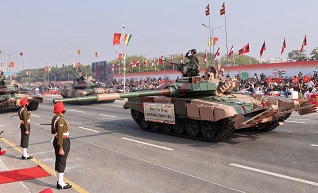
The Indian Army celebrated its 78th Army Day on 15 January 2026 at Jaipur, Rajasthan.
Marked the fourth time the Army Day Parade was held outside Delhi (after Bengaluru, Lucknow and Pune).
First-ever Army Day Parade conducted outside an Army cantonment, held in the heart of a city.
Hosted for the first time by South Western Command.
Source: PIB
Venue & Attendance
Parade route: Mahal Road, from Akshay Patra Circle to Bombay Hospital, Jaipur.
Witnessed by over one lakh spectators, reflecting strong civil–military connect.
Opening Ceremonies
Celebrations began with a Wreath Laying Ceremony at Prerna Sthal.
Wreaths laid by:
General Anil Chauhan, Chief of Defence Staff
General Upendra Dwivedi, Chief of the Army Staff (COAS)
Representatives of the Indian Air Force and Indian Navy
Tribute paid to soldiers who made the supreme sacrifice.
Role of the COAS
General Upendra Dwivedi served as the Reviewing Officer and took the salute.
Presented Sena Medals (Posthumous) for Gallantry to the Next of Kin of five Bravehearts.
March-Past & Contingents
Over 30 parade entities participated.
Seven marching contingents, including:
MADRAS Regimental Centre
RAJPUT Regimental Centre
Regiment of Artillery
Mixed Scouts Contingent
NCC Girls Contingent
Historic debut of Bhairav Battalion contingents from RAJRIF and SIKH LI.
Represented a shift towards lean, agile and high-impact combat formations.
Symbolised India’s resolve to “fight smarter and strike faster.”
Aviation & Fly-Past
Army aviation fly-past featured:
LCH, ALH, WSI and Apache helicopters
Added operational and visual grandeur to the parade.
International & Military Bands
Nepal Army Band participated, symbolising strong India–Nepal military ties.
Performances by seven Indian Military Bands, including regimental and mixed NCC bands.
Display of Military Hardware & Technology
Showcased the Army’s modern combat capabilities and technological edge.
Heavy armour and mechanised platforms:
T-90 tanks, Arjun tanks, BMP-2
Artillery and rocket systems:
SMERCH, PINAKA, K-9 Vajra, GRAD BM, Dhanush, ATAGS
Air defence and protection systems:
Akash, upgraded Schilka, Shaktibaan, L-70 guns
Precision strike & missile systems:
BrahMos, MILAN missiles, M777 ULH
Emerging technologies:
Robotic mules, All Terrain Vehicles, Vehicle-Based Infantry Mortars
Unmanned and counter-drone systems including Prabal C-UAS, Switch UAV, Sanjay, Pralay and Baaz armed drones
Several systems used in Op Sindoor were displayed, highlighting operational relevance.
Special Displays
Motorcycle Display showcased precision riding, discipline and teamwork.
Army Canine Display highlighted the role of military dogs in security, search and operational tasks.
Tableaux & Cultural Performances
Thematic tableaus focused on:
Op Sindoor
Army’s Decade of Transformation
Technology absorption and nation-building
Cultural tableau by Government of Rajasthan highlighted the state’s heritage.
Folk performances included:
Kalbelia and Gair dances (Rajasthan)
Chenda display by MADRAS Regiment
Kuki-Zo Council Demands Union Territory with Legislature
Renewed Demand for Union Territory
The Kuki-Zo Council (KZC) has reiterated its demand for the creation of a Union Territory with a legislature for Kuki-Zo tribes in Manipur.
The demand is presented as a constitutional and political necessity, not merely an administrative preference.
Allegations Against the State Government
The KZC alleged that elements of the Manipur State government were complicit in, or failed to prevent, large-scale violence against the Kuki-Zo people.
According to the Council, this perceived breakdown of trust eliminates any scope for continuing under the same state administration.
Representation to the Union Government
A memorandum outlining these concerns was submitted to Union Home Minister Amit Shah.
The memorandum was conveyed through the Deputy Commissioner of Churachandpur following a mass rally, indicating organised public mobilisation.
Impact of the Ethnic Conflict (Since May 3, 2023)
The ethnic violence has resulted in:
Over 250 Kuki-Zo deaths
7,000 houses destroyed
360 places of worship desecrated or vandalised
More than 40,000 people displaced
Most displaced Kuki-Zo people were forced out of the Imphal Valley.
Breakdown of Co-existence
The KZC stated that peaceful coexistence with the non-tribal Meitei community is no longer feasible under current circumstances.
It warned against resettling Meitei internally displaced persons (IDPs) in or near Kuki-Zo areas.
Role and Significance of the Buffer Zone
The buffer zone separates the Meitei-dominated Imphal Valley from the surrounding Kuki-Zo inhabited hill regions.
It was established to prevent direct confrontation and further bloodshed.
The KZC cautioned that any violation, dilution, or selective enforcement of the buffer zone arrangement threatens fragile peace and undermines law and order.
Humanitarian and Administrative Hardships
For nearly three years, Kuki-Zo people have been unable to access Imphal Valley.
This has led to:
Severe humanitarian distress
Economic disruption
Medical and healthcare challenges
Administrative isolation
Constitutional Justification
The KZC asserted that the demand for a Union Territory with legislature is well within the framework of the Constitution of India.
It urged the Centre to expedite a political solution to ensure:
Lasting peace
Dignity
Security for the Kuki-Zo people
Additional Demands and Concerns
Action against encroachments caused by:
Incorrect district boundaries
Faulty police jurisdiction demarcations
Protection of Kuki-Zo land and properties in the Imphal Valley.
Opposition to efforts aimed at halting inter-village road construction and development in Kuki-Zo areas.
ILO Employment and Social Trends 2026 report
Global Unemployment
The ILO projects the global unemployment rate at 4.9% in 2026, equivalent to 186 million people.
This is historically low but masks persistent issues such as poverty and informal employment.
Working Poverty
284 million workers live in extreme poverty, earning less than $3/day.
Between 2015–2025, the share of workers in extreme poverty declined by only 3.1 percentage points (to 7.9%), much slower than the 15 percentage points decline in 2005–2015.
Millions still lack access to quality jobs, particularly in low-income countries.
Informal Employment
More than 2 billion workers globally remain in informal employment.
The global rate of informality increased by 0.3 percentage points between 2015 and 2025, after having declined in the previous decade.
Gender Gaps
Gender disparities remain widespread in the labor market.
Limited progress has been made in some areas, such as reducing contributing family work, but overall gender gaps persist.
Structural Changes and Trade Uncertainties
Trade uncertainties are likely to remain a persistent feature of the global economic landscape in the short term.
Structural transformation and digitalisation are reshaping:
Trade
Supply chains
Production systems
These changes affect employment patterns, quality of work, and informality.
Key Observations
While global unemployment is low, working poverty and informality remain high, especially in low-income countries.
Slow reduction in extreme poverty indicates that economic growth has not translated equally into decent work opportunities.
There is a need for policies targeting the working poor, informal workers, and gender inequalities in the labor market.
World Bank raised India’s GDP growth forecast to 7.2%
Current Fiscal Year Growth (FY 2025-26)
World Bank raised India’s GDP growth forecast to 7.2%, up 0.9 percentage points from its June projections.
Key drivers:
Robust domestic demand
Strong private consumption
Impact of earlier tax reforms
Improvement in rural household earnings
Next Fiscal Year (FY 2026-27)
Growth projected to slow to 6.5%, reflecting normalisation after the current fiscal’s high momentum.
Medium-Term Outlook (FY 2027-28)
GDP growth expected to increase slightly to 6.6%.
Drivers:
Robust services sector activity
Recovery in exports
Pickup in investment
Global Context
Projection assumes U.S. maintains 50% import tariffs on certain Indian exports.
Despite tariffs, India is expected to remain the fastest-growing major economy in the world.
Strong domestic demand and resilient exports are expected to offset adverse impacts of tariffs.
Underlying Factors
Domestic consumption is supported by:
Tax reforms
Increased rural incomes
Exports and investment expected to pick up gradually over the medium term.
India’s growth momentum contrasts with slower growth in other major economies.