
Griffin-1 has recently successfully completed nearly three months of rigorous environmental testing at NASA’s Jet Propulsion Laboratory (JPL) and demonstrated its readiness for upcoming Landing Mission on Moon.
Griffin-1 is a commercial lunar lander developed by Astrobotic Technology (now operating as Voyager Technologies / Voyager Lunar Systems).
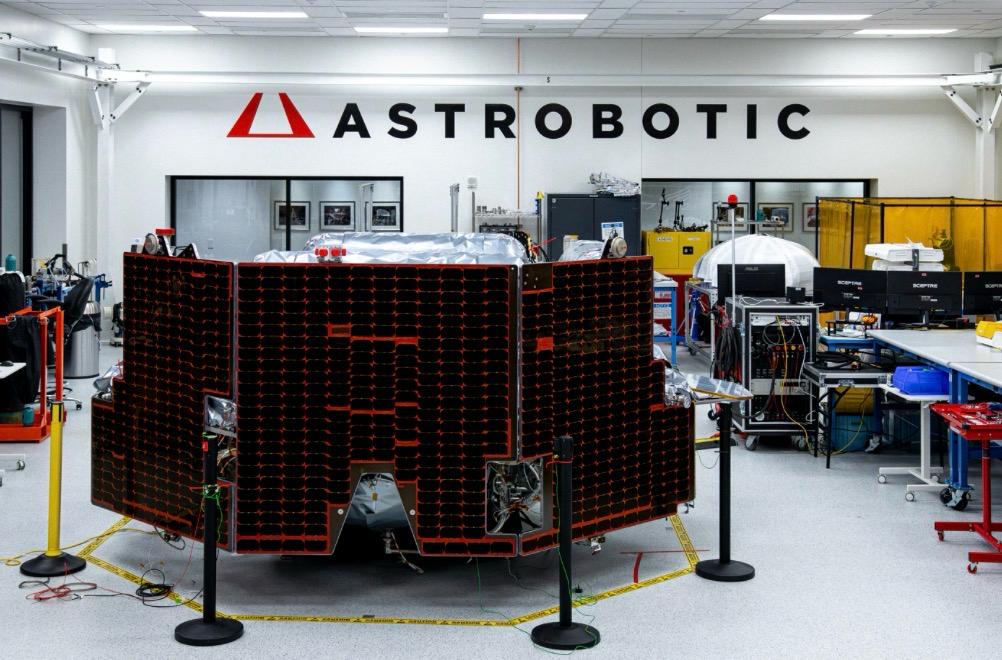
It has successfully cleared vibration/acoustic tests (simulating launch), electromagnetic interference checks, and thermal-vacuum cycling in JPL’s historic 25-Foot Space Simulator where temperatures range from about –100 °C / –148 °F to +75 °C / 167 °F.
It is part of NASA’s Commercial Lunar Payload Services (CLPS) initiative and the broader Moon Base program. The lander is designed as an infrastructure-class vehicle capable of delivering a substantial cargo load—more than 1,100 pounds (about 455–500+ kg, with a rated capacity up to around 625 kg)—to the lunar surface.
Key details:
- Destination: Nobile Crater region near the lunar South Pole near Mons Mouton.
- Launch: Planned for late 2026 on a SpaceX Falcon Heavy rocket from Kennedy Space Center.
- Payloads: Around 10 payloads from six countries. A major one is Astrolab’s FLIP rover (roughly 500 kg), a precursor for future lunar vehicles. Other items include technology demonstrators, scientific instruments, CubeRover hardware, and cultural/payload elements such as a time capsule.
After testing, it returned to the Pittsburgh facility for final assembly.
The mission supports NASA’s goals of lunar science, resource prospecting, technology demonstration, and preparation for sustained human presence under the Artemis program and Moon Base plans.