
Arbitration Council of India (ACI)
1. Arbitration Council of India (ACI)
- Section 10 of the Arbitration and Conciliation (Amendment) Act, 2019 inserted Part IA into the Arbitration and Conciliation Act, 1996.
- This provides for establishment of a seven-member Arbitration Council of India (ACI).
- The ACI is intended to:
- Frame policies for grading arbitral institutions
- Recognize professional institutes accrediting arbitrators
- Conduct training, workshops, and courses in arbitration
- The ACI has not yet been constituted.
2. Legislative Reforms to Promote Arbitration
Over the past decade, the Government of India has introduced key amendments in:
- 2015
- 2019
- 2021
These reforms aim to:
- Ensure time-bound arbitration proceedings
- Safeguard neutrality of arbitrators
- Reduce judicial intervention
- Enable speedy enforcement of arbitral awards
- Promote institutional arbitration
- Align Indian arbitration law with global best practices
- Build a robust arbitration ecosystem
3. Establishment of India International Arbitration Centre (IIAC)
- The India International Arbitration Centre Act, 2019 led to the creation of the India International Arbitration Centre.
- The Centre:
- Functions as an independent and autonomous body
- Facilitates institutional arbitration, including international commercial arbitration
- Provides cost-effective, world-class arbitration services
- Offers reputed empanelled arbitrators and administrative support
- It is envisaged as a model arbitral institution in India.
4. Awareness and Promotional Initiatives (2025)
(a) June 2025 Conference
- Organized by the Department of Legal Affairs
- In collaboration with:
- India International Arbitration Centre
- Oil and Natural Gas Corporation
- Targeted Central Public Sector Enterprises (CPSEs)
- Focus: Promoting adoption of institutional arbitration
(b) September 2025 Oxford-Style Debate
- Hosted at the High Court of Delhi
- Theme: Institutional Arbitration
- Featured eminent speakers debating the merits and challenges
(c) September 2025 Webinar
- Organized by IIAC
- In collaboration with:
- Federation of Indian Exports Organisation
- Aimed at exporters to highlight benefits of institutional arbitration in commercial disputes
5. Knowledge Dissemination
- IIAC launched the inaugural edition of its annual magazine
- Focus: Alternative dispute resolution (ADR) law and procedures
- Contributions from national and international arbitration experts
6. Adoption by Central Public Sector Enterprises (FY 2024–25)
The following CPSEs have adopted IIAC as their designated arbitral institution:
- Oil and Natural Gas Corporation
- Gas Authority of India Limited
- Bharat Petroleum Corporation Limited
V.O. Chidambaranar Port Authority Becomes First Indian Port to Deploy Advanced Anti-Drone System
In a landmark move to strengthen maritime and coastal security, V.O. Chidambaranar Port Authority (VOC Port) has become the first port in India to initiate the implementation of an advanced Anti-Drone System, marking a significant milestone in protecting critical port infrastructure.
Advanced 360-Degree Drone Detection & Neutralisation
The project involves deployment of a comprehensive integrated Radio Frequency (RF) and radar-based drone detection and jamming system, specifically engineered for complex port environments.
The system includes:
- Drone Detector (RF-based)
- Drone Detection Radar
- Man-pack Drone Jammer
Together, these components provide:
- 360-degree omnidirectional coverage
- Effective detection and neutralisation range of up to 5 km
- Real-time detection, tracking, and classification
- Rapid deployment capability
- Enhanced protection for strategic assets and operational zones
This indigenous electronic countermeasure system significantly boosts the Port’s ability to detect and neutralise unauthorised drones in real time, safeguarding personnel, cargo, vessels, and infrastructure.
V.O. Chidambaranar Port Authority
The V.O. Chidambaranar Port Authority (VOC Port) is a major seaport located in Thoothukudi, India. It operates under the Ministry of Ports, Shipping and Waterways and serves as a key maritime gateway for southern India, handling bulk cargo, containers, and liquid commodities. Its strategic location on the southeastern coast makes it a vital trade hub linking India with international shipping routes.
Key facts
- Location: Thoothukudi, Tamil Nadu, India
- Opened: 1974 (as Tuticorin Port Trust)
- Renamed: 2011, in honor of freedom fighter V.O. Chidambaranar
- Administration: Major Port under Government of India
- Primary exports: Coal, salt, sugar, fertilizers, and containers
History and Development
Initially declared a minor port in the 19th century, Tuticorin gained prominence for pearl fishing and coastal trade. It was declared India’s tenth major port in 1974. In 2011, the port was renamed after V.O. Chidambaranar, a nationalist leader and maritime entrepreneur. Continuous expansions have modernized the port to handle diverse cargo and deep-draft vessels.
Infrastructure and Operations
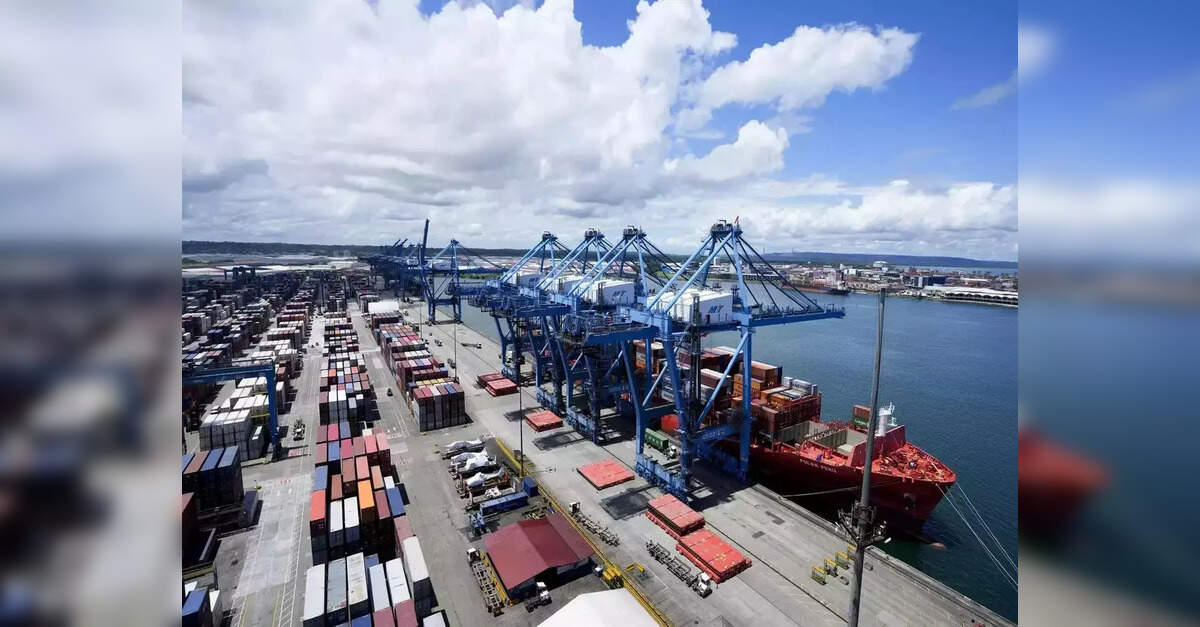
VOC Port comprises two harbors—an inner and outer harbor—with extensive berthing facilities for container, bulk, and liquid cargo. It has container terminals operated through public-private partnerships and advanced cargo-handling systems. Connectivity via rail, road, and inland waterways supports hinterland trade across Tamil Nadu and neighboring states.
Economic Importance
As one of India’s fastest-growing ports, VOC Port significantly contributes to regional economic growth and employment. It supports major industrial sectors such as energy, salt, fertilizers, and petrochemicals. The port’s modernization projects align with India’s “Sagarmala” initiative to enhance port-led development.
Drug Price Regulation & Prescription Framework in India
Legal & Policy Framework
- Drug prices are regulated under the:
- Drugs (Prices Control) Order, 2013 (DPCO, 2013)
- Based on:
- National Pharmaceuticals Pricing Policy (NPPP), 2012
- Objective:
- Ensure availability of essential medicines at reasonable prices
- Maintain balance between affordability and industry growth
- Promote innovation and competition
- Pricing approach follows:
- Principle of essentiality
- Market-based pricing (for formulations only)
- The Department does not maintain cost data of companies, as pricing is market-based.
Role of Regulatory Authorities
National Pharmaceutical Pricing Authority (NPPA)
- Functions under the Department of Pharmaceuticals (DoP).
- Responsible for:
- Fixing ceiling prices of scheduled formulations.
- Fixing retail prices of new drugs.
- Schedule-I of DPCO is based on:
- National List of Essential Medicines (NLEM).
Mechanism of Price Fixation
For Scheduled Drugs (Essential Medicines)
- Ceiling price fixed as:
- Average Price to Retailer (PTR) of brands with ≥1% market share
- Plus 16% retailer margin
For New Drugs
- Retail prices fixed using the same formula:
- Average PTR + 16% margin
For Non-Scheduled Drugs
- Manufacturers cannot increase MRP by more than 10% in a 12-month period.
Monitoring & Enforcement
- Prices of both scheduled and non-scheduled drugs are monitored.
- Action taken against:
- Overcharging
- Violations of DPCO provisions
Supply Chain Margins
- Trade margins at distributor/wholesaler levels:
- Not regulated by government
- Guided by commercial practices
Prescription Regulations & Generic Drugs
Indian Medical Council (Professional Conduct, Etiquette and Ethics) Regulations, 2002
- Clause 1.5 mandates:
- Doctors must prescribe generic names
- Legibly and preferably in capital letters
- Ensure rational use of drugs
Regulatory Enforcement
- Circulars issued by the erstwhile Medical Council of India (MCI).
- Directorate General of Health Services (DGHS):
- Directed Central Government hospitals to prescribe generic medicines only.
- Instructions issued to:
- CGHS doctors
- Wellness Centres
Disciplinary Authority
- Under National Medical Commission Act, 2019:
- State Medical Councils or
- Ethics and Medical Registration Board (EMRB)
- Can take disciplinary action against doctors violating regulations.
- States advised to:
- Promote generic prescriptions
- Conduct prescription audits in public health facilities
Labelling Requirements
- Under DPCO, 2013:
- Manufacturers must print Maximum Retail Price (MRP):
- In indelible ink
- Inclusive of all taxes
- On the label of container and minimum retail pack
- Manufacturers must print Maximum Retail Price (MRP):
Banned Drugs
Prohibition Status
- Central Government has banned:
- 603 drugs & Fixed Dose Combinations (FDCs) for human use
- 40 drugs for animal use
- List available on:
- CDSCO website (www.cdsco.gov.in)
Legal Consequences
- Manufacture, sale, and distribution of banned drugs:
- Punishable offence under the Drugs and Cosmetics Act, 1940
Enforcement Mechanism
- State Licensing Authorities (SLAs):
- Empowered to take action
- If complaints are received:
- CDSCO takes up matter with State Drugs Controller
Creation of the Frontier Nagaland Territorial Authority (FNTA)
A tripartite agreement for the creation of the Frontier Nagaland Territorial Authority (FNTA) was signed between the Eastern Nagaland People’s Organisation (ENPO), the Government of Nagaland, and the Ministry of Home Affairs (MHA). The agreement was signed in the presence of Union Home Minister Amit Shah and Nagaland Chief Minister Neiphiu Rio.
ENPO represents eight recognised Naga tribes from six eastern districts of Nagaland. The agreement paves the way for establishing the FNTA across Tuensang, Mon, Kiphire, Longleng, Noklak, and Shamator districts, with devolution of powers over 46 subjects to the new authority.
Key Highlights
- Tripartite Agreement Signed Between:
- Eastern Nagaland People’s Organisation (ENPO)
- Government of Nagaland
- Ministry of Home Affairs (MHA), Government of India
- Purpose of the Agreement:
- Creation of the Frontier Nagaland Territorial Authority (FNTA).
- Granting autonomy through devolution of 46 subjects.
- Strengthening administrative and developmental focus in Eastern Nagaland.
- Administrative Provisions:
- Establishment of a mini-Secretariat for FNTA.
- To be headed by an Additional Chief Secretary/Principal Secretary.
- Development outlay to be shared proportionally based on population and area.
- Financial Support:
- A fixed annual allocation to be determined.
- Initial establishment expenditure to be covered by the Ministry of Home Affairs.
- Constitutional Safeguard:
- The agreement does not affect Article 371(A) of the Constitution, which provides special provisions for Nagaland.
- Political Significance:
- Described by Amit Shah as a major step towards a “dispute-free Northeast.”
- Part of 12 key agreements signed by the Centre in the Northeast since 2019 to ensure peace and stability.
Significance
The agreement marks an important milestone in addressing long-standing regional aspirations in Eastern Nagaland. By providing institutional autonomy without altering constitutional safeguards, the FNTA framework seeks to enhance governance, ensure equitable development, and further consolidate peace in the Northeast.
Expiration of New Strategic Arms Reduction Treaty (New START)
The expiration of New START marks a major inflection point in nuclear arms control — not because thousands of new warheads will suddenly appear overnight, but because the guardrails, transparency, and predictability mechanisms are now gone.
Here’s what this really means in strategic terms:
1. The End of Legally Binding Limits
The New START (entered into force in 2011) capped:
- 1,550 deployed strategic nuclear warheads
- 700 deployed delivery systems (ICBMs, SLBMs, heavy bombers)
- 18 annual on-site inspections
- Regular data exchanges and notifications
With its expiration on February 5, 2026 (after suspension in 2023), there are now no binding limits on U.S. or Russian strategic nuclear forces for the first time since the Strategic Arms Limitation Talks era.
That doesn’t mean immediate expansion — both sides are already near the ceiling and large-scale expansion would be expensive and time-consuming — but the legal ceiling is gone.
2. Loss of Verification = Loss of Predictability
The most significant loss is not numerical limits — it’s verification.
Without inspections and data exchanges:
- Intelligence relies solely on satellites and signals intelligence.
- Ambiguities increase.
- Worst-case planning becomes more likely.
- Politicization of estimates becomes easier.
Historically, arms control reduced miscalculation by creating transparency. That predictability is now absent.
3. Strategic Instability Is Broader Than Warhead Counts
The strategic environment is far more complex than in 2010.
Russia’s Novel Systems
Russia introduced systems such as:
- RS-28 Sarmat
- Avangard
- Poseidon
- Burevestnik
Some were counted under New START; others fell outside treaty definitions.
Emerging U.S. Concerns
The U.S. has pursued:
- Missile defense systems (criticized by Moscow)
- Conventional prompt global strike concepts
- Advanced cyber and space capabilities
Entanglement Risk
Nuclear and non-nuclear systems now overlap:
- Cyber operations could affect nuclear command-and-control.
- Conventional precision strikes may look like nuclear launches.
- Hypersonic delivery systems compress decision time.
This increases escalation risk even without increasing arsenals.
4. China Complicates the Equation
China’s nuclear expansion has become central to the political impasse.
- The U.S. argues it cannot remain uniquely constrained while China expands.
- Russia argues NATO’s aggregate capabilities affect its security balance.
- China maintains its arsenal is far smaller than U.S. and Russian levels and rejects joining a bilateral framework.
This triangular dynamic makes a return to traditional bilateral arms control much harder.
5. What Comes Next? The “Three-Prong” Realist Path
As suggested by Thomas Countryman of the Arms Control Association, a realistic near-term approach may involve:
U.S.–Russia Transparency Measures
Even without full treaty restoration:
- Data exchanges
- Notification regimes
- Reopening military-to-military channels
P5 Standardization
The five recognized nuclear weapon states (U.S., Russia, China, UK, France) could:
- Align definitions of warheads and delivery systems
- Establish modest transparency norms
Broader Nonproliferation Tools
Instead of counting warheads immediately:
- Launch notification agreements
- Crisis hotlines
- Incident prevention agreements
- Fissile material security measures
This lowers risk without forcing premature numerical parity negotiations.